Can Stress Cause Neck and Shoulder Pain?
If you’ve ever been stressed and noticed your neck and shoulders becoming increasingly tight and uncomfortable, you may have wondered:
Can stress actually cause neck and shoulder pain?
Stress can be associated with increased muscle tension, disrupted sleep, and changes in how we experience pain. For some people, periods of prolonged stress seem to go hand in hand with increased tension and discomfort around the neck and shoulders.
But stress isn’t the only possible reason.
How you sit, how long you spend at a desk, your working position, and other physical factors may also contribute.
In my acupuncture clinic, when I ask people where they’re feeling their neck and shoulder pain, they often don’t have a name for the exact area.
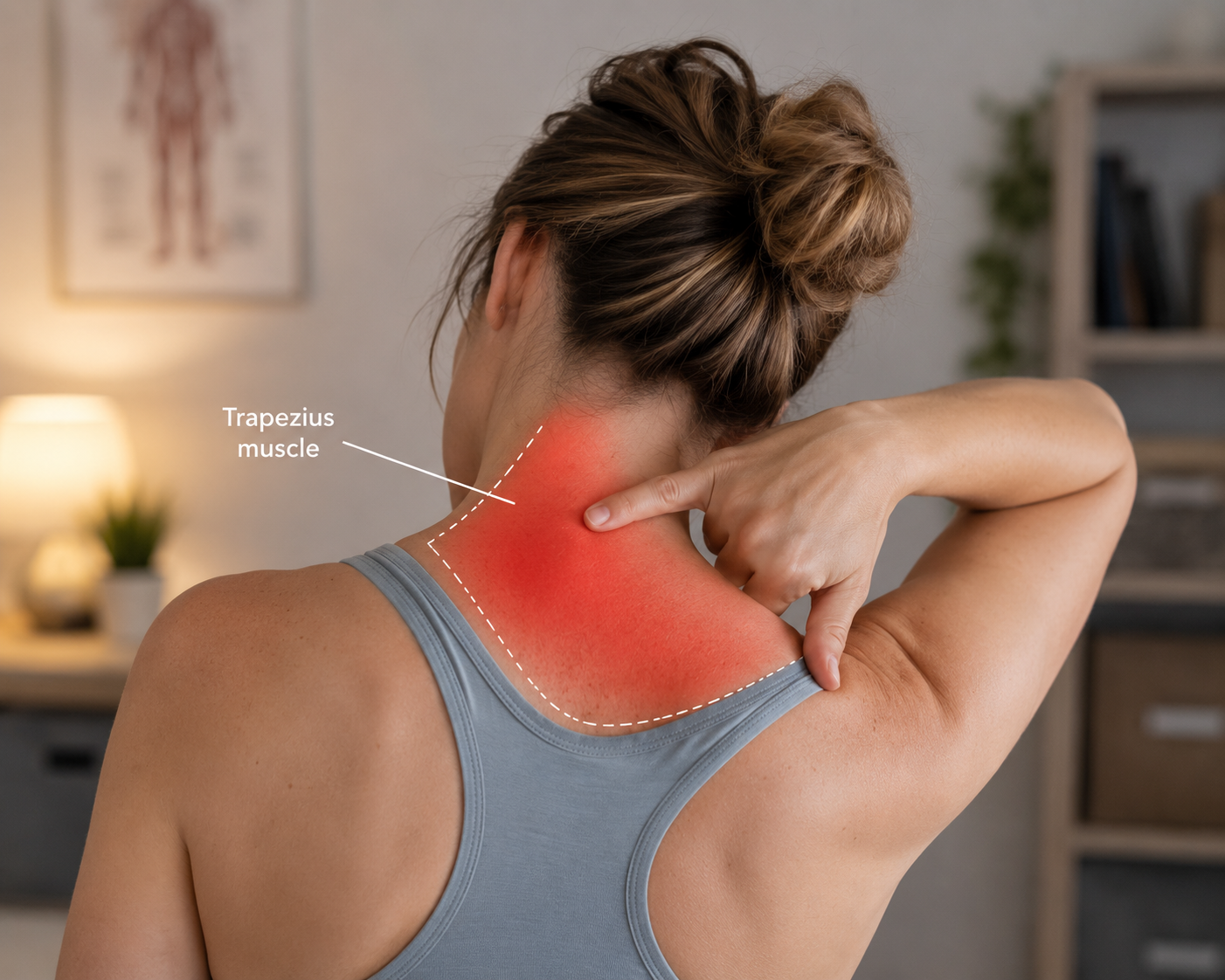
They simply point to it. They put their hand across the top of their shoulder — around the area of the trapezius muscle — and say:
“It’s here.”
Then they’ll rub their hand up towards the back of their neck and start moving their head from side to side, showing me where everything feels tight.
It’s something I’ve seen many times over more than 25 years of working with people experiencing pain.
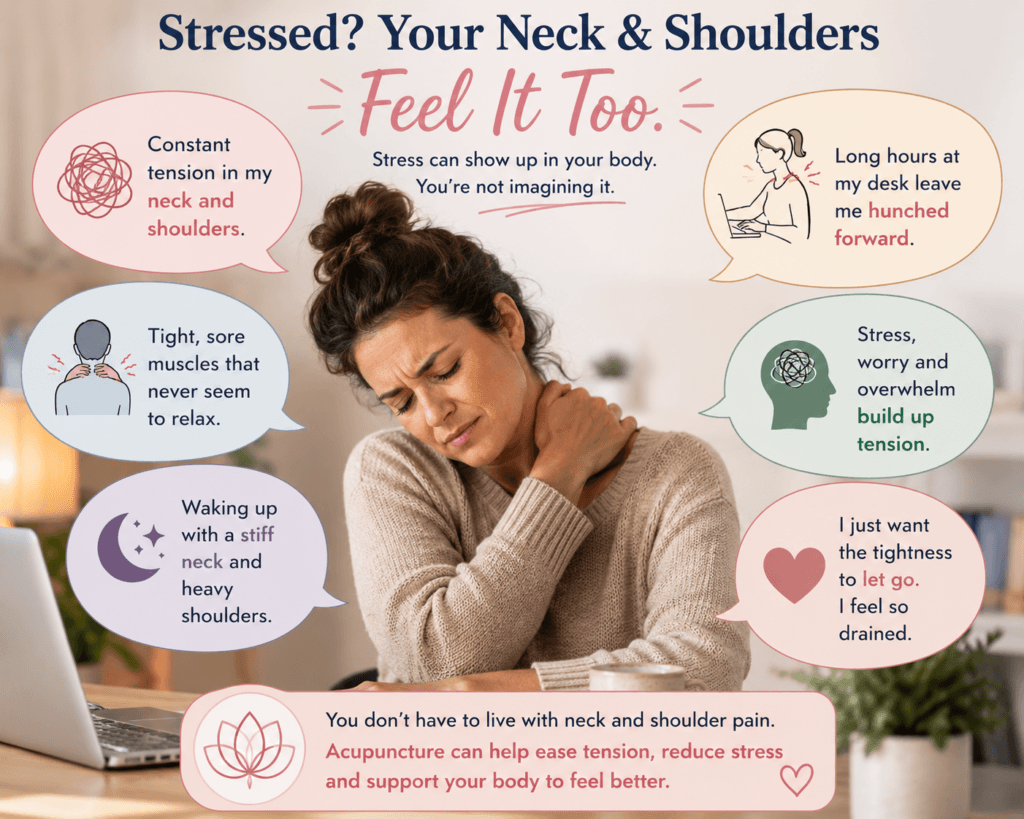
Why do stress and tension often seem to end up in the neck and shoulders?
When people are under prolonged stress, they may notice themselves becoming physically tense.
You might find yourself raising or tightening your shoulders without even realising you’re doing it.
Your sleep may be affected.
You may spend longer sitting still.
And if you’re already working for hours at a desk with your head positioned forward towards a computer screen, you may become even more aware of discomfort around your neck and shoulders.
This doesn’t mean that every case of neck and shoulder pain is caused by stress.
Pain can have many different causes, and persistent or worsening symptoms should be appropriately assessed.
But when someone comes to see me, I’m interested in understanding the whole picture.
Could my desk or computer position be contributing to my neck and shoulder pain?
A lot of people I see with neck and shoulder pain spend significant amounts of time sitting at a desk.
They might be working on a laptop with their head angled forward or looking down at a screen for long periods.
So we talk about their working environment.
- Where is your computer screen?
- How are you sitting?
- Are you spending hours in the same position?
- Are you able to change position during the day?
- Could you stand for some periods rather than sitting continuously?
These may sound like simple questions, but they’re important.
I don’t want to look only at where someone feels pain. I want to understand what their day actually looks like and what may be happening around the times when their symptoms are most noticeable.
Can emotional stress make neck and shoulder tension worse?
I’ve seen people come into my clinic during some of the most stressful periods of their lives.
One lady had been caring for her husband after he became very unwell.
At the same time, she was looking after her children and felt deeply disappointed by the lack of support she received from family members.
She had expected people to be there for her because she had supported them through difficult times in their own lives.
Instead, she felt she was carrying an enormous amount on her own.
During this period, she was experiencing significant tension and discomfort around her neck and shoulders.
I wouldn’t say that emotional stress was necessarily the sole cause of her physical pain.
But when we talked about what was happening in her life, it was clear to me that simply focusing on the painful area wouldn’t tell me the whole story.
So our work considered both the physical symptoms she was experiencing and her overall stress and wellbeing.
“I just want someone to pummel the tightness out of my shoulders.”
Another lady who came to see me was experiencing significant stress and wasn’t sleeping well.
When she woke in the morning and sat up in bed, she became immediately aware of how tight her neck and shoulder muscles felt.
She described wanting someone to just pummel the tightness out of them.
She even joked that she’d like someone to stand on the back of her neck and shoulders just to make that feeling of tightness go away.
Of course, that’s not something I’d recommend doing.
But I understood exactly what she meant.
When your neck and shoulders feel constantly tight, you might not describe it as a sharp pain.
It’s more like a feeling that you desperately want someone to release the pressure.
If you also experience pain or stiffness further down your back, you may find my article about lower back pain helpful.
Why do I look beyond the painful area?
When someone comes to see me with neck and shoulder pain, I want to know more than simply:
“Where does it hurt?”
I want to understand:
- When did it start?
- What was happening around that time?
- What does your working day look like?
- How much time do you spend sitting?
- How are you sleeping?
- Are you under significant stress?
- What movements make the pain worse?
- What is the pain stopping you from doing?
Sometimes the answer points towards physical factors.
Sometimes stress and poor sleep may also be part of the picture.
Often there may be several things happening at the same time.
That’s why my approach is to look at the person sitting in front of me — not simply the painful neck or shoulder.
Can acupuncture help with stress-related neck and shoulder tension?
Some people consider acupuncture as part of their approach to managing musculoskeletal pain, stress or tension.
When someone comes to see me, I look at their individual symptoms and circumstances rather than assuming that every person’s neck and shoulder pain has the same cause.
For someone who is also experiencing significant stress or poor sleep, those factors may form part of our conversation and the overall approach to their care.

About the Author
Lucy Townsley Lic. TCM is the founder of Galway Acupuncture Hub in Loughrea, Co. Galway.
With over 25 years of clinical experience, Lucy has helped thousands of people with neck pain, back pain, headaches, sciatica and other musculoskeletal conditions.
Her approach is simple: listen carefully, understand how pain is affecting your life, and create a treatment plan that’s tailored to you so you can get back to doing the things you enjoy. Read more
Struggling with neck and shoulder tension?
If you’re experiencing persistent tightness or pain around your neck and shoulders — particularly during a stressful period of your life — you’re welcome to contact me.
I’m always happy to chat, answer your questions, and help you decide whether acupuncture is the right option for you.
📞 087 227 3084
👉 Book your appointment online here
A €20 booking deposit secures your appointment and is deducted from the cost of your treatment.
Health Insurance
I’m recognised by Vhi, Laya Healthcare, Irish Life Health and other major Irish health insurers. Depending on your policy, you may be able to claim back some or all of the cost of your treatment.
I’d love to help you get back to doing the things you enjoy.
Frequently Asked Questions About Stress, Neck and Shoulder Pain
When should I get neck or shoulder pain checked?
Neck and shoulder pain can have many causes.
You should seek appropriate medical assessment if your pain follows a significant injury, is severe or progressively worsening, or you experience significant weakness, persistent numbness or loss of function.
Seek urgent medical attention for sudden neck, shoulder or arm pain accompanied by symptoms such as chest pain, breathing difficulties or feeling seriously unwell.
Can stress cause neck and shoulder pain?
Stress may contribute to increased muscle tension and can also affect sleep and pain perception. Some people notice increased tightness or discomfort around their neck and shoulders during stressful periods. However, neck and shoulder pain can have many causes, so persistent symptoms should not automatically be attributed to stress.
Why do my shoulders feel tight when I’m stressed?
During periods of stress, some people unconsciously tense or raise their shoulders. If this happens repeatedly or for prolonged periods, you may become increasingly aware of tightness or discomfort around the neck and shoulder muscles.
Why do I wake up with a tight neck and shoulders?
There can be several possible reasons, including your sleeping position and other musculoskeletal factors. Stress and disrupted sleep may also contribute to how tense or uncomfortable you feel when you wake. Persistent morning neck or shoulder pain should be appropriately assessed.
Can sitting at a computer cause neck and shoulder pain?
Spending long periods in one position or working with your head positioned forward or down towards a screen may contribute to neck and shoulder discomfort for some people. Changing position regularly and reviewing your workstation setup may be worth considering.
Can poor sleep make neck and shoulder pain feel worse?
Pain can disrupt sleep, and poor sleep may also affect how we experience pain. This can sometimes create a difficult cycle where discomfort interferes with sleep and poor sleep leaves you feeling less able to cope with discomfort.
Can anxiety cause muscle tension?
Anxiety and stress can be associated with physical symptoms, including muscle tension in some people. However, persistent pain or unexplained physical symptoms should be appropriately assessed rather than automatically attributed to anxiety.
Can acupuncture help with neck and shoulder tension?
Some people consider acupuncture as part of managing musculoskeletal pain, stress or tension. Whether acupuncture is appropriate depends on the individual and what may be contributing to their symptoms.
When I work with someone, I want to understand both the physical symptoms they’re experiencing and the wider picture of what’s happening in their everyday life.
Related Articles
You may also find these helpful:
- Neck Pain article — if neck pain, stiffness or restricted movement is your main problem.
- Shoulder Pain at Night — if shoulder pain is waking you or making it difficult to sleep comfortably.
- Anxiety article — if stress or anxiety is affecting how you feel physically and emotionally. (coming soon)